Eliminate Cellular Dead Zones with Cel‑Fi Smart Signal Technology
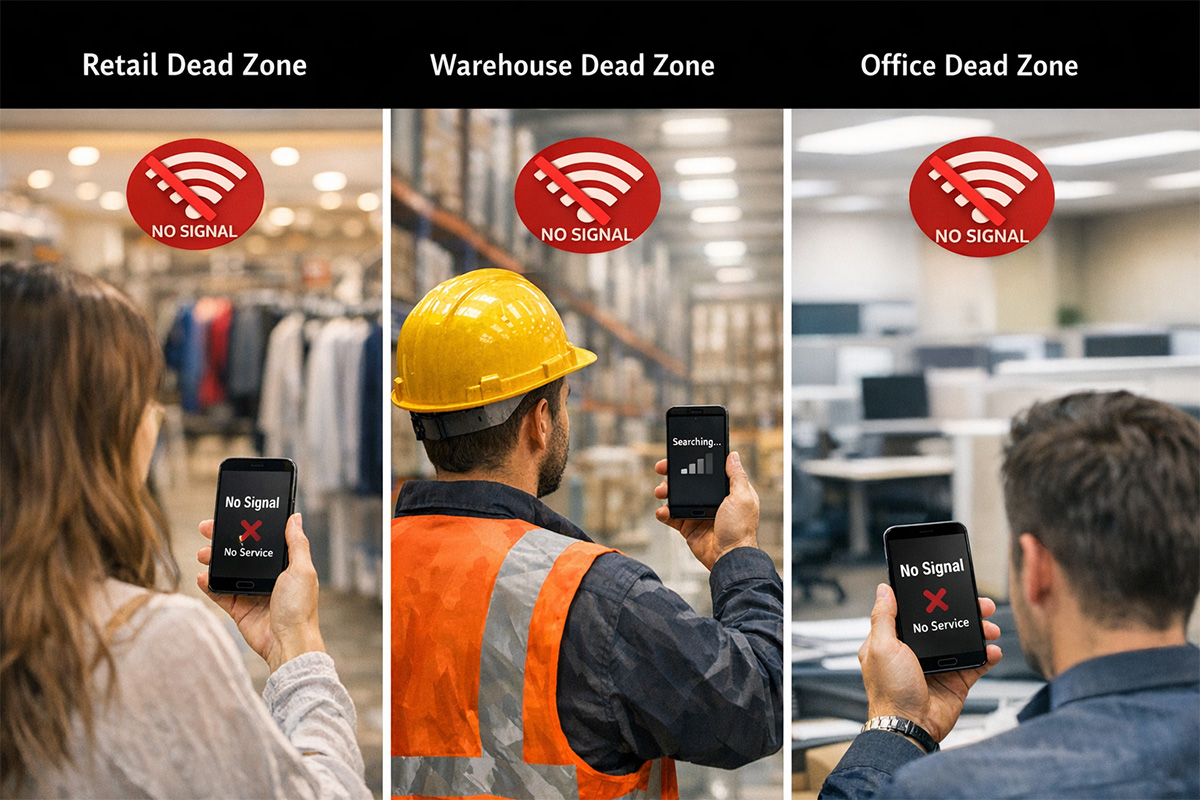
Cellular dead zones are more than a nuisance in homes, offices, warehouses, schools, and remote facilities. Weak signals disrupt calls, throttle data speeds, and create costly communication gaps. Cell‑Fi technology is engineered to solve that problem, improving indoor and hard-to-reach cellular coverage with a smart, carrier-approved approach that outperforms traditional solutions.
Covered in this blog:
1. What Causes Cellular Dead Zones
2. Dead Zone or Just Weak Signal? Here’s How to Tell
3. What Traditional Boosters Fall Short on Cell Phone Dead Zones
4. How Cel-Fi Works – and What Sets it Apart
5. Cel‑Fi vs. DAS: Which Solution Do You Need?
6. The Right Cel-Fi Solutions for Every Environment
7. Real World Impact
8. Why Businesses Invest in Coverage
9. Choosing the Right Cel-Fi System
10. How HCI Can Help
What Causes Cellular Dead Zones?
A cellular dead zone is any area where your phone can’t maintain a usable connection to a cell tower, resulting in dropped calls, failed texts, or no data at all. Dead zones aren’t limited to rural areas. They occur inside retail stores, large office buildings, parking garages, tunnels, and even specific rooms within your home.
The most common culprits are building materials. Brick, concrete, steel framing, and even LEED-certified “green” windows are notorious for blocking or weakening cellular signals before they reach your device. Distance from the nearest cell tower and local terrain such as hills, dense trees, or other tall structures, can make the problem worse. In large commercial spaces, the challenge compounds further: racks, machinery, and open floor plans create layered coverage obstacles that simple fixes can’t overcome.
Dead Zone or Just Weak Signal? Here’s How to Tell
The bars on your phone aren’t always a reliable indicator. For a more accurate read, measure your signal in decibels (dBm) rather than bars. Android users can find this under Settings, while iPhone users can dial *3001#12345#* to enter field test mode and view their dBm reading. Ideally, you want an outdoor reading between -50 and -80 dBm; anything below -110 dBm is essentially a dead spot.
Why Traditional Boosters Fall Short on Cell Phone Dead Zones
Basic boosters and legacy coverage systems can help in straightforward scenarios, but they often struggle with larger, more complex environments. A common question is whether a booster can even work when you have no bars at all. The answer depends on whether there is any signal outside your building. Boosters amplify the existing signal; they can’t create it from nothing. That said, boosters have stronger antennas than phones, so even if your device shows zero bars, a booster may still detect and amplify a faint signal your phone can’t pick up on its own. An HCI site assessment is the most reliable way to find out.
How Cel‑Fi Works and What Sets It Apart
Cel‑Fi systems capture weak cellular signal from the nearest tower, amplify it, and rebroadcast it into the areas that need coverage most. The result: better voice quality, fewer dropped calls, and more reliable data in locations where phones previously struggled to connect.
Unlike simpler systems, Cel‑Fi continuously monitors signal conditions and boosts only what’s needed — delivering strong coverage while protecting network integrity. The key differences from a standard booster come down to gain, intelligence, and carrier approval. Cel‑Fi’s smart, self-organizing algorithms ensure the largest possible coverage area without compromising or interfering with mobile operator networks or other subscribers’ signals.
Cel‑Fi products are also the only 3G, 4G, and LTE signal booster solution authorized for use in nearly 100 countries by over 200 carriers. Each carrier has specifically authorized Cel‑Fi to transmit on their licensed spectrum without causing interference, a distinction that matters in regulated commercial and industrial environments.
Cel‑Fi vs. DAS: Which Solution Do You Need?
Distributed Antenna Systems (DAS) capture outside signals and can amplify them significantly across large spaces. However, traditional DAS deployments tend to be expensive, complex, and time-consuming to install. Cel‑Fi is engineered as a more accessible alternative to self-configuring systems that deliver high gain without the full cost and infrastructure of a DAS build-out. Smaller properties typically do well with a smart booster solution. Larger commercial or industrial sites often benefit from an enterprise-level system. Installation time reflects this range: a straightforward setup can be completed in as little as 15 minutes, while complex multi-antenna deployments may take 4–5 hours. Enterprise QUATRA systems are significantly faster than traditional DAS taking days rather than months.
The Right Cel‑Fi Solution for Every Environment
Cel‑Fi offers a purpose-built product family designed to match the coverage challenge, whether it’s a small office or a sprawling industrial campus.
Cel‑Fi PRO — Homes and Small Offices
PRO eliminates dead zones in smaller indoor spaces with up to 100 dB of gain and coverage up to 13,000 square feet per system. It’s self-configuring with no external antennas or complex wiring, making installation fast and the improvements immediate.
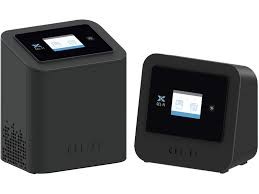
Cel‑Fi QUATRA — Enterprise Buildings
For larger offices, commercial buildings, and distribution centers, QUATRA delivers scalable coverage across bigger footprints. It’s positioned as a digital alternative to legacy DAS as it is ideal for logistics, manufacturing, and multi-floor campus environments where coverage gaps directly affect productivity and safety.
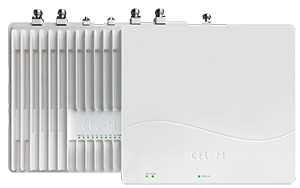
Cel‑Fi GO — Remote and Mixed Environments
GO is built for tough signal environments, including remote facilities and mixed indoor/outdoor use cases. In real-world deployments, it has restored practical coverage in buildings where users previously had little or no usable signal making it a strong fit anywhere connection reliability matters but infrastructure options are limited.
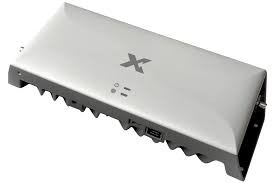
| Dead-zone scenario | Recommended Cel-Fi solution | Key points on how it fixes dead zones |
| Home / small office, weak indoor RF | PRO / DUO+ | High-gain, self-install system, eliminates indoor dead zones without external antennas. |
| Mid-size enterprise building | QUATRA | Active DAS hybrid; uniform, high-strength signal across floors and wings. |
| Large warehouse / distribution center | QUATRA | Solves dropped calls and dead areas caused by racking, machinery, and construction. |
| Remote building / mixed indoor–outdoor | GO / GO X / SOLO | NEMA-rated booster with donor antenna pulling in weak macro signal, redistributing indoors. |
| Vehicles, fleets, forklifts, trucks | GO M | Adapts to moving environment to prevent dead zones on the road and between yards. |
Real-World Impact
Once installed, the difference is hard to miss. Users consistently report stronger reception, better call quality, and dependable data in spaces that were previously plagued by dead zones. Case studies from Nextivity span schools and large distribution centers, where reliable connectivity supports communication, payment systems, and daily operations.
Why Businesses Invest in Coverage
Strong cellular coverage is no longer a nice-to-have thing, it’s a core business requirement. Mobile communication, telematics, payment processing, and safety alerts all depend on it. Dead zones interrupt all of them.
The business case is especially clear in retail. Research from Path Intelligence found that a 1% increase in customer dwell time leads to approximately a 1.3% increase in spending which translates to a 2–7% revenue lift. Reliable in-store connectivity keeps customers engaged, enables seamless mobile payments, and supports staff communications. Dead zones undermine all of it.
By extending reliable signal into the places where people work and shop, Cel‑Fi helps reduce dropped calls, support smoother workflows, and raise the overall user experience.
Choosing the Right Cel‑Fi System
The best solution depends on three factors: the size of the space, the strength of the outside signal, and the nature of the coverage problem. Smaller properties often benefit most from Cel‑Fi PRO, while larger commercial and industrial sites are better suited to QUATRA or GO. A proper site assessment is the most reliable way to identify where coverage is weakest, and which system will deliver the most impact.
The Bottom Line, How HCI Can Help
If your building suffers from dead zones, weak indoor service, or chronic dropped calls, Cel‑Fi offers a proven path to better connectivity. Its intelligent architecture, broad product lineup, and track record of real-world results make it a compelling choice for organizations that need dependable cellular coverage.

HCI is the leading Motorola Solutions Channel Partner in Houston , Texas. We have been serving our clients for over 40 years.
Texas Security License: B24122601
Navigation
Popular Links
Contacts
Locations:
HCI
1105 Industrial Blvd.
Sugar Land, TX 77478
281-491-1616
HCI Dallas (Formerly Blair Communications, Inc.)
11407 Goodnight Lane
Dallas, TX 75229
972-247-4901
E-mail: Contact Us

